

By: Charles Murray
Published: 2025
152 Pages
Briefly, what is this book about?
Murray’s journey from agnosticism to belief, a journey that is largely intellectual rather than spiritual. Because it was largely intellectual, it’s also more explicable. This allows Murray to write a different sort of conversion story, one that’s more amenable to being mapped out as a straightforward guide with sources and citations.
What authorial biases should I be aware of?
Murray has been a libertarian thinker for decades, though he’s probably best known for The Bell Curve which he co-authored. So Murray is approaching things from a conservative/libertarian milieu. That said, it’s a very balanced book. When he provides his sources for a particular idea he also includes sources that are critical of that idea.
Who should read this book?
I’ve read a lot of books that fall in this general area. Too many to list (consider The New Testament in Its World, Modern Physics and Ancient Faith and Believe just in the last six months) I would read Murray before reading any of them. It’s clear, comprehensive, short, and meaty. Even if you’re a raging atheist I would read this book because it’s the quickest way to understand your opponents’ best arguments.
Specific thoughts: The surprising strength of the Shroud of Turin
I was pretty familiar with most of the evidence Murray brought up in this book. He did introduce me to some books I hadn’t heard of, but most of what was in the book was stuff I’d heard already. Nevertheless it was quite useful to have it compiled in such a concise way. The big exception to this sense of familiarity was his discussion of the Shroud of Turin.
If you have any awareness at all about the controversy over the Shroud, you’ve probably heard that it was conclusively proven to be a forgery by radiocarbon dating. End of story, everyone can move on.
I was never in the “conclusive” camp, but the radiocarbon evidence seemed to end the possibility of debating those who doubted. For those people the carbon-14 results were the end of the story, and it didn’t matter what other weirdness was attached to the Shroud. The carbon dating was the silver bullet of the skeptical.
But until Murray assembled it all in one place, I didn’t realize how much weirdness there was. On the one hand you have the radiocarbon dating, but on the other hand…
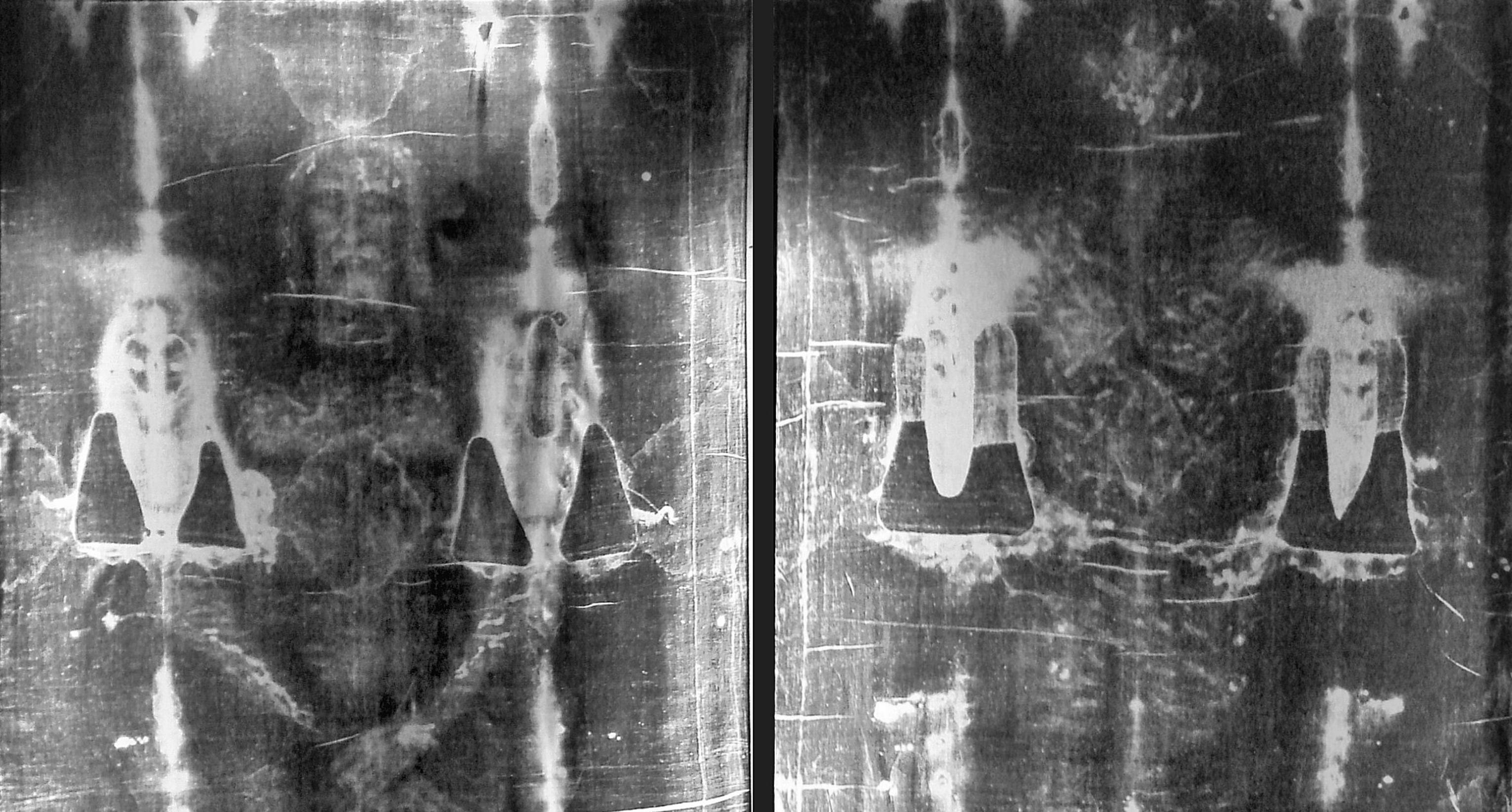
Photographic negative reveals a detailed crucifixion-like image (wounds, scourging, puncture wounds on scalp/forehead, wrist/feet holes, side wound). This isn’t obvious to the naked eye viewing the cloth normally.
Image intensity appears to encode cloth-to-body distance (darker where the cloth would have been closer, lighter where farther).
3D information is encoded in the image: VP-8 analysis produced a coherent 3D rendering from the shroud image in a way normal photos do not.
Superficial Coloration: The image is bafflingly superficial; the color resides only on the top two or three fibers of a thread and never penetrates deeper than two microns (millionths of a meter).
No Pigment: No paint or pigment was found on the linen fibers.
No Directionality: Microdensitometer analysis revealed the coloration is microscopically directionless, ruling out application by hand or brush.
Human Blood: Faint stains on the Shroud have been identified as human blood, and analysis indicates these fluids did not come from a decomposing corpse.
Complexity: Reproducing the image would require a brush with a single bristle 1/100th of a millimeter wide, applying an agent that colors the fiber’s circumference but leaves the interior cellulose uncolored—a process the The Shroud of Turin Research Project (STURP) team found technologically incredible.
STURP tested alternate mechanisms (including “scorch” from a heated statue) and found fatal problems with each; the technical report concluded no “technologically credible process” has been proposed that matches all observed characteristics. Murray notes this conclusion has not been successfully challenged for decades.
Blood flow, scourge marks, and other image details fit the biblical narrative and also match anatomical/historical expectations.
Dust/pollen/organic & inorganic material lifted via adhesive tape later produced evidence the cloth was in the Middle East, specifically Jerusalem.
Textile evidence: the weave is described as common in antiquity in the Mideast but not medieval Europe.
Stitching evidence: a complex stitching style is said to match stitching on an ancient garment from Masada.
Pollen distribution fits a “route” and strongly favors Jerusalem: some pollen types match places tradition associates with the shroud’s travels (Edessa, Constantinople, Lirey, Turin), but most are near Jerusalem; about half are Mideast-only; some confined to the Jerusalem area; and blossoming times are compatible with Passover timing.
Rare limestone traces: microscopic limestone on the shroud matched limestone from the same rock shelf as the Holy Sepulcher/Garden Tomb in a University of Chicago (Fermi Institute) microprobe analysis; Murray reports it was the only match among ten tomb samples examined.
A later (2019) cellulose-aging test (Wide-Angle X-ray Scattering) is described as dating the linen to ~19–21 centuries and as incompatible with the 1988 radiocarbon result unless the shroud was stored for centuries at implausibly high temperatures.1
With all of this on the “authentic” side of the scale, it feels like the balance has to shift to that conclusion, almost regardless of how much “Bayesian weight” you give the results of the radiocarbon dating. But Murray isn’t done. It turns out that silver bullet may have been a dud.
[I]n 1988, carbon dating put the creation of the shroud at 1325 plus or minus 65 years—the appropriate range if the image is a forgery. For many, this closed the case. But carbon dating the shroud was controversial even before it was implemented—the danger of a contaminated sample was thought to be high. That danger was apparently realized. Raymond Rogers, the coauthor of the original STURP technical report, studied the sample and concluded that “[t]he combined evidence from chemical kinetics, analytical chemistry, cotton content, and pyrolysis/ms proves that the material from the radiocarbon area of the shroud is significantly different from that of the main cloth. The radiocarbon sample was thus not part of the original cloth and is invalid for determining the age of the shroud.
It appears that they tested a part of the Shroud that was a later medieval repair, not part of the original. I know that the obvious next question is: why don’t they go back and make sure to get a piece of the original and use radiocarbon dating on that? I don’t know. Perhaps they will at some point, but for now the evidence seems pretty conclusive that the Shroud dates back to the place and time of Jesus’ death. The conclusion that the Shroud’s peculiar qualities are a result of being imprinted by the holy power of Jesus’ resurrection are not quite so firm, but consider again the characteristics of the image in the cloth:
[T]he straw-colored image on the shroud is bafflingly superficial. Each linen thread in the shroud is composed of smaller fibers ten to twenty times thinner than a human hair. The color on the shroud is always on the top two or three fibers in the thread—it never penetrates deeper than two microns (millionths of a meter). On a colored fiber with a diameter of fifteen microns, the cellulose within is uncolored. Colored fibers are side by side with uncolored ones.
The implications are that any non-pigment coloring agent (e.g., an acid) that had been applied to the surface of a fiber must cover the entire circumference of the fiber and yet be confined to two microns of depth, leaving the interior uncolored, and have no effect on adjacent uncolored fibers. Doing this would require a brush with one bristle no bigger than a hundredth of a millimeter in diameter—and access to a high-power microscope. These findings ruled out all known artistic ways of creating the image.
Perhaps all of this is old hat to many of my religious readers, and I’m behind the curve. On the other hand perhaps there’s some skeptical take that “demolishes” the various pieces of evidence Murray presented. (If there is, I’d be curious to see it. Murray doesn’t mention anything substantial and I assume he looked.) For my part, as a naive rube from one of the flyover states, I thought it was pretty freaking amazing.
—---------------------------------------------------------------
Yes, I’m a naive rube, but I aspire to be less naive and less rube-ish. If you’d like to join me on my journey of anti-naivete and rube denudation, consider subscribing.
To the best of my recollection I have, to this point, avoided direct copying and pasting from AI into my blog, but with this list I broke that rule and used a combination of ChatGPT, Gemini, and some light editing.
Your lead question reminded me of Pascal. He also believed that reason couldn't get you to faith. In fact, he went further, arguing that the philosophers' god could never be the God of Abraham, Isaac, and Jacob.
I've always found the Shroud to be one of the Church's most valid relics, mostly because it's one of the few relics the disciples would have access to and would also have been very likely to save.
As a former-Protestant-turned-atheist-turned-agnostic, I've never actually been among many pro-Shroud-sters, and I haven't even heard even my deeply miracle-seeing Catholic friends bring it up when I've asked for evidence (Fatima is what they point to), so you can guess my biases here!
But I'll say that the facts you listed, if true, would very much move me to be pro-Shroud. I'll read the book. For the moment, I'll list what I've heard that puts me on Team Doubt for this one:
1. It looks like a medieval drawing of Jesus.
2. When it first surfaced in the 1300s, it was denounced as a forgery; the local bishop allowed it to be shown publicly as something of an art piece, so long as there was no confusion as to its authenticity.
3. I'm told that the arms can't actually work — their position is impossible.
4. If I learned the resurrection happened, I wouldn't expect this to exist. If Jesus was resurrected, why would that shoot light, or whatever, out of his body? This feels natural with a folk-physics "life = energy" assumption, but I'm not sure it makes sense with what we now understand to be true of life.
Finally, there's one of the points cited that I've heard the opposite of: the weave of the fabric. I've heard it's a much better match for both the time and the local area. I think I heard that from either one of these Dan McClellan videos:
https://youtu.be/z416X_cmOHM
https://youtu.be/1BMiNvnPEL4
Obviously, I'm happy to change my beliefs on any of this! If the Shroud were real, it would be so WEIRD...