

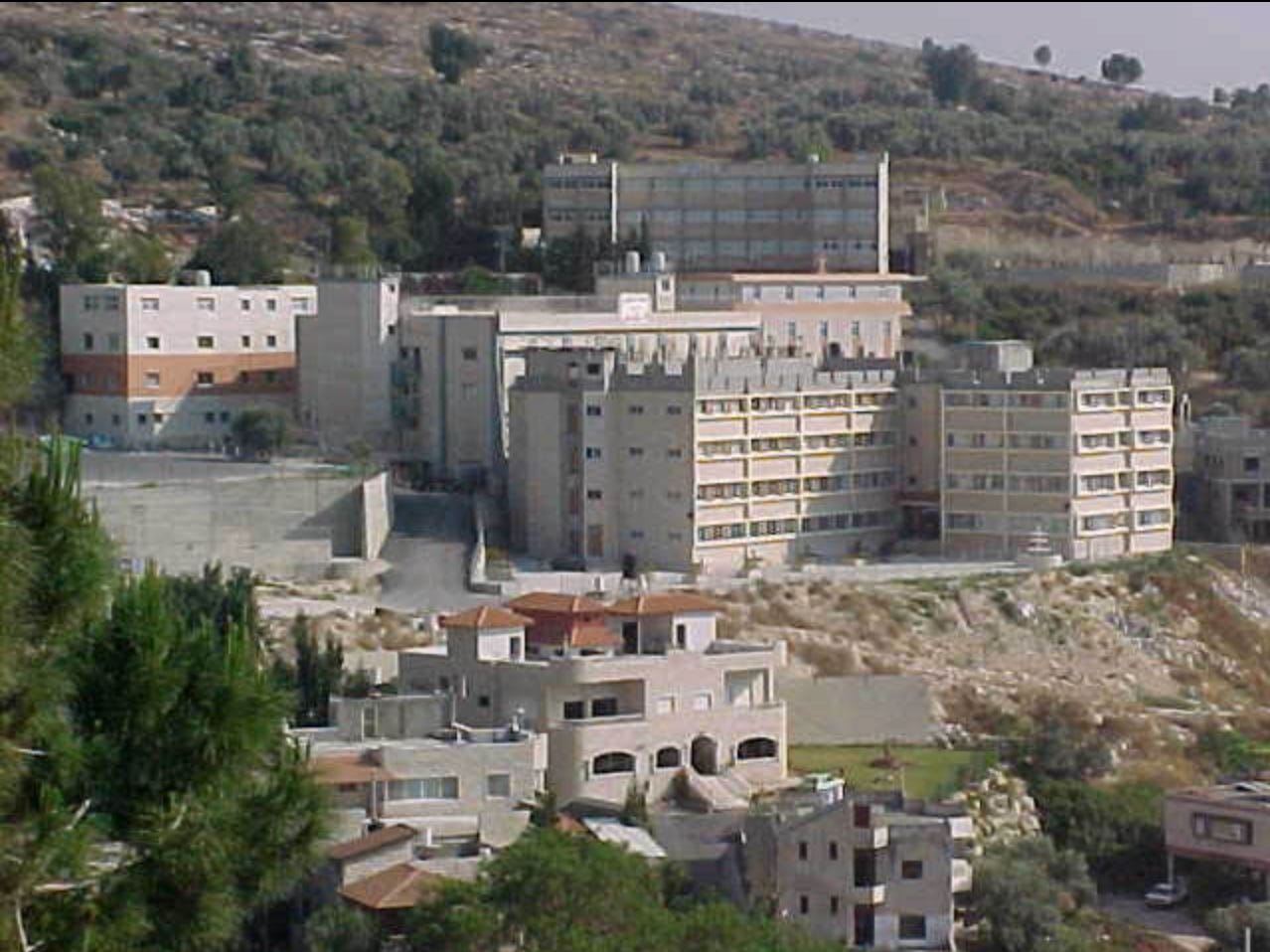
We Belong to the Land: The Story of a Palestinian Israeli Who Lives for Peace and Reconciliation
By: Elias Chacour and Mary E. Jensen
Published: 1990
212 Pages
Briefly, what is this book about?
An autobiographical account of Chacour’s struggles as a Palestinian Christian working to build up his community in Galilee (Ibillin) while under continual pushback from Israeli bureaucracy and internal church politics.
What’s the author’s angle?
At the time the book was written Chacour was a Melkite Greek Catholic Priest in the town of Ibillin. (He was later appointed to be the Archbishop of Haifa.) He has worked tirelessly to resolve the Palestinian problem using nonviolent means that emphasize reconciliation and the common background of both people. He pushes for Palestinians to be treated with dignity, but also for them to create dignified institutions. These institutions, particularly the school he founded, take up most of his energy.
Who should read this book?
As part of my post on Israel and Hamas I asked for books making the pro-Palestinian case. One of my readers recommended this book. It was a good book, but to the extent that it illuminated the problem it did so very obliquely. This is the story of a non-violent Palestinian Christian written over 30 years ago. Certainly it helped my understanding at maybe a 30,000 foot level? But it didn’t shed much light on the current crisis.
However, if you want the story of someone who took a really “bad hand” and did something truly extraordinary with it, then this is your book.
Specific thoughts: If every Palestinian and every Israeli resembled Chacour and his congregation then the problem would be solved.
Certainly one can’t help but sympathize with the plight of the ordinary Palestinian. Particularly the Christian Palestinians who comprise the bulk of the book. It’s also certain that the Israelis treat them, and the other Palestinians pretty shabbily. But this is the Middle East, and everything is relative.
The Israelis repeatedly seize Palestinian land, and Chacour’s biggest lament is that his family was driven from their ancestral home. But they don’t eject him from the country entirely, and there are even courts where Chacour can bring petitions. Yes, these petitions mostly fail, but occasionally they succeed. Additionally, there are Jews who are sympathetic to Chacour’s plight and they work to help him. He talks about his friendship with many of them.
One of the major elements of the book is Chacour’s efforts to build a school, and once the school is built, to expand it. His major challenge is getting a building permit, but despite not having a permit he builds anyway. He gets harassed a lot, and it’s all pretty reprehensible, but eventually the matter ends up in court. At the first court appearance the judge gives Chacour five months to find an attorney and return. After the second court appearance the judge declares that Chacour will never get a permit, but the building will not be destroyed. Obviously not the ideal outcome, but Chacour is overjoyed.
Okay, now flip all of that. Can you imagine a Jew living in Gaza with many sympathetic Palestinian friends? What about the school? Imagine that you had a Jew, or even a Christian, in Gaza, trying to build a school. These ideas are immediately ridiculous. There haven’t been any Jewish civilians in Gaza since the 2005 disengagement. There are at most 1,000 Christians, but they’re clustered around the three remaining Christian churches in Gaza City. Even if we handwave things and say that we have a functionally identical situation: a priest building a school in opposition to Hamas, can you imagine the issue being decided in a Palestinian court of law?
I understand the violence and the persecution, and I understand that the situation is complicated, and, as such, any solution is complicated as well. But to the extent that this book offers a solution it appears to be very different from the one offered by most Palestinian defenders. Chacour’s solution is to work harder and be better people. That’s the kind of thing we should be encouraging on both sides. Which brings me back to the title of this section, and my overall point. This is a great book, and Chacour is a great person, but it doesn’t really give a lot of insight into the situation because Chacour is an extreme outlier. If everyone were like him, not only would we not have any problems in the Middle East, we might not have any problems anywhere. In fact you could hold everything else constant, and if the Palestinians were just all like Chacour’s congregants I think the Israel-Palestinian problem would be solved.
I say problem, but it’s actually “problems”. There are many, many problems covered in this book, and it’s worth looking at a few more of them before I wrap things up.
First, what’s really striking about the book is not the level of interference from the Israelis. We expect that. It’s the level of interference from Chacour’s own church. Perhaps I shouldn’t be surprised. Dynamic individuals always get pushback when they try to reform sclerotic institutions. But there’s one bishop that really goes above and beyond and causes Chacour no end of grief. At one point in the book we discover that Chacour’s application for a building permit has been ignored at the request of his bishop!
When my friend and I arrived the next morning, the supervisor had the proper file on his desk. “It was way at the back of a drawer in the outer office,” he said. “We had received orders to put the file aside and not deal with it.”
I was infuriated that we had been cast aside for a whole year. “We will take this to court, and my friend here will help us!”
“Now, Father Chacour, do not be hasty. If you sue, you will hurt your own bishop, because he is the one who instructed us through the government official not to deal with your project.”
Second, the closest Chacour comes to being murdered or severely beaten occurs when he visits Beirut and is picked up by a Palestinian militia. They assume that since he came from Israel he must be a Jewish spy. He’s kidnapped off the street and taken to a location controlled by the Palestinian Liberation Organization (PLO), and surrounded by men with guns. He assumes he’s going to be killed. Fortunately after some very tense questioning he’s able to convince them that he’s basically on their side.
Finally there is the overarching belief that all of the inhabitants seem to have is that they were there first. It’s their land. This belief is right in the title of the book, and even Chacour for all of his hard work, good intentions, and desire for reconciliation, firmly believes that his family was there first.
“One of my forefathers was sitting under our fig tree in front of our house one day. He was eating figs and enjoying God’s gift to him in the land of his ancestors. Suddenly he saw down the path a poor stranger, a foreigner who was poorly dressed. His feet were bare, he was covered with dust, and he was tired, hungry, and thirsty. He looked scared. My forefather called to him. The stranger came. He was given food to eat, water to drink, clothes to wear, and a place to rest.”
The policeman tapped his foot impatiently on the floor. The Palestinians seemed to hold their breath. All inspection work was forgotten.
“And then, after the foreigner was rested and about to leave, my ancestor asked him his name. He discovered that that foreigner was your forefather Abraham, coming from Iraq, Mesopotamia, a Gentile among a Gentile nation.”
A collective sigh escaped from the Palestinians. The words expressed every Palestinian’s knowledge and belief: we belong to the land and our ancestors have been in the land of Palestine for thousands of years. The young state of Israel cannot change that .
Maybe this is so. Maybe Chacour’s family has been living on the same spot in an unbroken line since before the time of Abraham. But it’s obviously impossible for him to know that (and unlikely for it to be true). And yet this belief forms the basis for the attitudes of everyone in that region, and as long as beliefs like that hold, a permanent reconciliation is going to be very, very difficult.
—-----------------------------------------------------------------------------------
When I did a genetic test it turned out that my patrilineal haplogroup is E1b1b. This is primarily found in North Africa, which means, even if you discount the Mormon Pioneers, and the immigration from Europe, my ancestors have moved around a lot. Perhaps that’s why I move around so much with what I write. I keep hoping to settle down, but there’s so many interesting subjects to explore. To join me on my peregrinations consider subscribing.
About Palestine and Israel, I don't think anything new can be said, at least not by me now. It's a fractal tangle of conflicting interests and claims.
About your ancestors, I think you might have a claim to reparations for the whole destruction of Carthage thing?
First of all, you know you don't HAVE to have an opinion on Israel/Palestine, it's not like a voting requirement or anything. You are allowed to look at it all from a distance and say this is a very sad mess but nobody is asking you to solve it.
Second, I don't mean to offend whoever suggested "We Belong to the Land," but I would not even put that in the top 50. If you want a broader view of the history, read Ian Black's "Enemies and Neighbours," "Israel: A History" by Anita Shapira, and "'The Hundred Years' War on Palestine" by Rashid Khalidi. If you want more human stories, read "A Day in the Life of Abed Salama: A Palestine Story" by Nathan Thrall (his other writing is also good), also "Once Upon a Country: A Palestinian Life" by Sari Nussiebeh; "My Promised Land" is a favorite of journalists but it comes off to me as if the Jewish author is "apologizing" to his Palestinian neighbors in a way I found off-putting. Basically there are a ton of other books that I'd put ahead of Chacour's (I guess the appeal is the fact that he is Christian?) and I bet if you just searched the web you'd find good suggestions. There are also some great books that focus on specific conflicts and their impact, recent ones include Yardena Schwartz's "Ghosts of a Holy War" and "Eighteen Days in October" by Uri Kaufman. I know this is a lot - I think I'd suggest "A Day in the Life of Abed Salama" as a first book to just appreciate what life is like in Jerusalem these days, without all the politics or history.