

By: Fredrik deBoer
Published: 2025
168 Pages
Briefly, what is this book about?
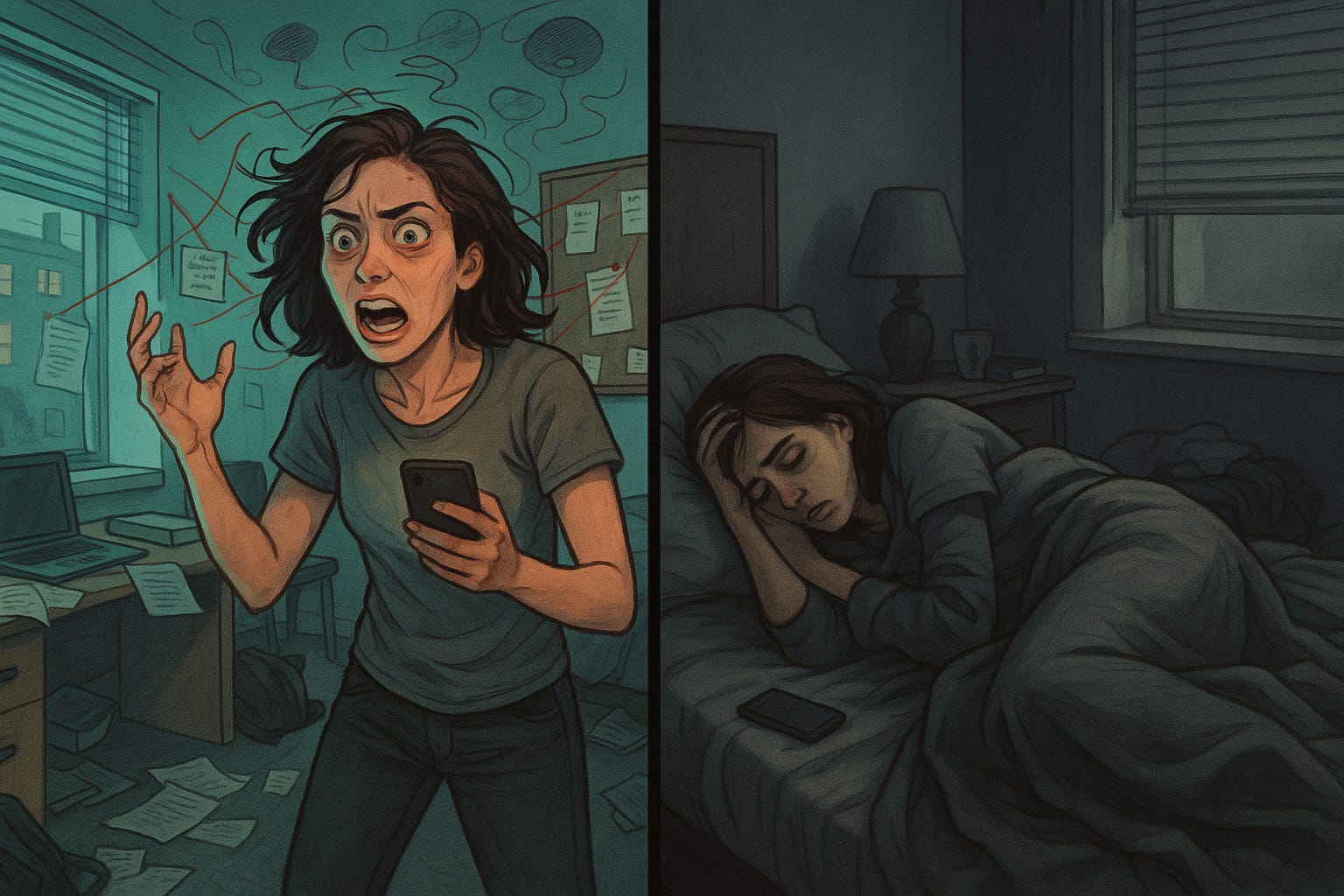
The book follows Alice. Alice has severe bipolar disorder. This doesn’t come out until she’s at college. It’s entirely awful. Going from least to worst bad, we see: large weight fluctuations, social fallout, impulsive sex, being committed, psychotic and manic paranoia, and depression so deep she can’t make it to the bathroom.
What’s the author’s angle?
Normally I don’t talk about the angle for a fictional book, but this book deserves (demands?) an exception. DeBoer is known for many things. (And I would say that he’s one of the few Substack writers where I read 90%+ of what they write.) One of the big things he’s known for is pushing back against the old vision of the mentally ill as tortured geniuses or the more modern quirky, actually it’s kind of a super power narrative. This book was explicitly written to provide a very real depiction of what it’s like to have a severe mental illness. (It succeeds by the way.)
Who should read this book?
If you like anything deBoer has written, I think you’ll like this. His unsparing view of reality is his biggest charm, and it definitely comes through in this book. I know people who don’t like deBoer’s nonfiction, but who nevertheless liked this book.
If you’ve never heard of deBoer, but you like books where characters have an intense interior life, and there’s not necessarily a hopeful “happily ever after” arc, I would also definitely recommend this book.
Specific thoughts: Most men (and women) lead lives of quiet desperation
For somewhat obvious reasons we like books with happy endings. We like books where everything fits into an arc, and bad things are revealed as necessary stepping stones on the path towards a hidden, but ultimately glorious outcome. We want events to have meaning. We want our lives to move in a positive direction. We want all these things not because that’s how it is in reality, but precisely because that’s not what reality is like.
In reality a lot of people lead lives of quiet desperation. Not every second of every day, but there are definitely days or weeks where desperation prevails and sometimes desperation prevails for years or decades. Often it kind of comes together in the end; everything that was suffered is ultimately revealed to have had purpose and meaning. (Often this meaning must be constructed by the person themselves.) But even then it often takes so long, and is so subtle that it doesn’t fit into an easy narrative. It doesn’t always come together, far too often it doesn’t. And deBoer has crafted a beautiful and heartbreaking story about one of those times: The novel depicts a life that, at its best, is a slow desperate grind. One that’s far better than the madness that attends mania and depression. One that’s far better than the lives of many people suffering from severe bipolar disorder, but still, very clearly, a life of quiet struggle.
Major Spoiler!
Some people have taken issue with the ending of the book. And it is one of those ambiguous endings, which often piss me off as well. Basically after years of being on meds and getting by, but just barely, Alice decides to commit suicide. She gets a prescription she knows she can OD on, and prepares to take her life. Not because she’s unbearably depressed, but mostly because she’s tired of the neverending grind. But as she’s preparing she has second thoughts, and next to the pills she intended to take, she lines up the pills she’s supposed to take, the pills she’s been taking every day for at least a decade. And as she starts to consider things it’s clear that she’s on the razor’s edge. Perfectly perched on the balance point between ending it all, and continuing to grind away. And in this moment it’s not about what choice she makes (though I certainly hope she chooses life) but about the stark realities of the choice. The true difficulty of her condition, and the true heartbreak of it as well. By stopping the book before seeing what choice Alice made, deBoer puts the focus on the difficulty of that choice and the fact that it has to be made repeatedly, maybe not every day, but often enough. It’s not about what choice Alice makes at that moment, it’s about the fact that the choice lies perpetually in the background and will continue to do so, and that it will always be a grind.
Deboer shows us the grind, and with that final scene, he really brings out how hard it is, and how much people have to struggle. I have been and will continue to think about this book for a very long time.
I was surprised when I was looking at this book on Goodreads how many reviews directly attacked deBoer. I’m trying to remember another book with that level of ad hominem. Nothing immediately comes to mind. I get why you might not like deBoer, I think deBoer gets why you might not like him, but judge the book on its own merits. And whatever you do, don’t listen to anything anybody says on BlueSky.
For lots of book judgment consider checking out the archives. Or if you have a particular book you’d like me to judge, leave it in the comments.
A really powerful review written by a talented writer about a gritty, real, devastating book.
It inspired the below:
Most people don’t quit with a bang, but with a whimper.
Not in dramatic collapse, but in small surrenders:
a little less effort, a little less belief,
one excuse at a time.
Like bankruptcy, this happens gradually, and then all at once.
Life can feel like a slow, grinding ache: a treadmill of almosts and not-yet-enoughs and Lord-have-mercys.
But it doesn’t have to end in resignation.
When you hit the wall (and you will)
meet every “I can’t go on”
with a stubborn, unreasonable,
“I’ll go on.”
That’s where the story turns.
Thank you so much for the spoiler. I lost a child to mental illness suicide a few months ago and at first I was thinking of reading this to see if her sisters ought to do so as well. Based on the ending you describe, absolutely not! Thanks.