

Forgotten Victory: The First World War: Myths and Realities
By: Gary Sheffield
Published: 2001
318 Pages
Briefly, what is this book about?
An apologetic work directed at British leadership during WWI. It refutes the claim that the British Army was composed of “lions led by donkeys”, and instead lays out a case for increasing competence, the necessity of offensives, and a string of victories in 1918.
What's the author's angle?
Sheffield is a noted member of the revisionist school. He wants to revise the vision of futility most commonly associated with the British participation in WWI.
Who should read this book?
Someone who wants a more complete view of WWI, and who is wary of simplistic tales of strategic idiocy.
Specific thoughts: WWI was horrible for the British, but it couldn’t have been won any other way
Broadly, Sheffield makes three points in the book:
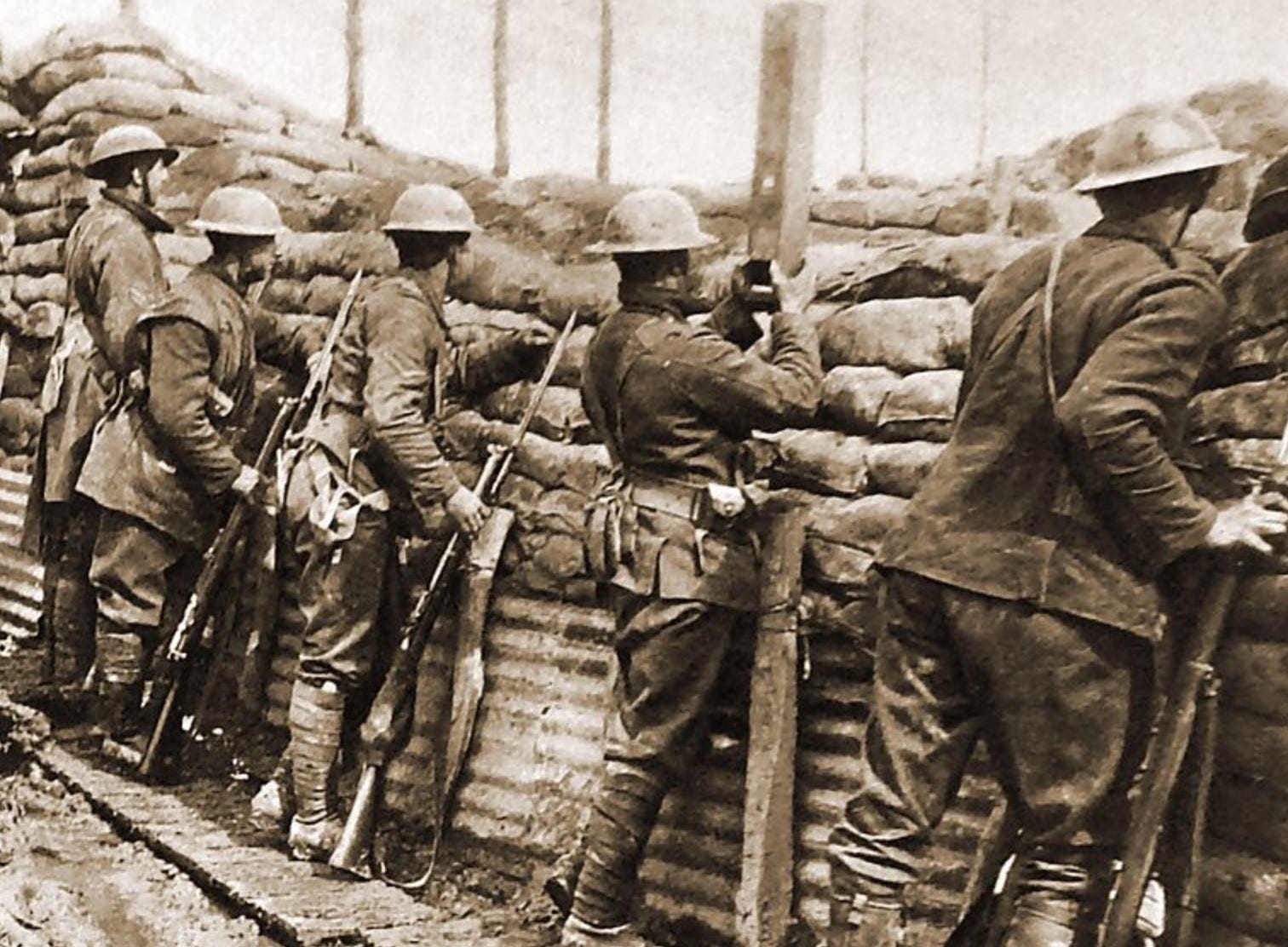
First, he argues that it was necessary for the Allies to launch repeated offensives. These offensives tied up troops which would have otherwise gone to the Eastern Front, causing it to collapse even sooner. This in turn would have allowed Germany to focus on the Western Front even earlier than spring of 1918. Given how big of an impact these troops made even then, if they had arrived sooner it would have been catastrophic.
Second, he lays out all the ways British tactics improved in between 1914 and 1918. Most of these improvements are not widely known, or recognized as being revolutionary. (Examples include the no. 106 fuze, infantry re-organization, and artillery integration with air reconnaissance among other things.) And many of these improvements consisted of combining different, more mundane tactics, into an effective strategic package.
Finally, he offers a retort to those who contend that Britain should have played to its strengths. Primarily the idea that they should have used their navy to conduct amphibious landings at strategic and decisive places of their choosing. But this is precisely what they tried to do at Gallipoli, and it was a disaster.
The one major attempt to use British seapower to outflank the Western Front came in 1915. In March-April of that year the Allies attempted to seize the Turkish Straits. This would have allowed them to pass a fleet through the narrow waters that separate Europe from Asia, and thus threaten Constantinople, the capital of the Ottoman Empire. The idea behind the Dardanelles or ‘Gallipoli’ campaign, which originally came from Winston Churchill, earns high marks from the point of view of modern military doctrine. It was expeditionary, making use of Britain’s naval assets in combination with land power, and ‘manoeuvrist’, seeking to avoid enemy strengths (on the Western Front) and land a heavy blow that would shatter the cohesion of the Central Powers alliance by knocking Turkey out of the war. It was even, in best manoeuvrist fashion, aimed at Turkey’s centre of gravity: the seizure of Constantinople would have made it difficult, if not impossible, for Turkey to continue to fight. It is not surprising that Gallipoli is still studied in staff colleges across the world.
Fifteen years after the campaign, a senior officer who participated in its latter stages commented that ‘Mr. Winston Churchill’s conception was magnificent’. However, the same officer also stated that ‘it was the most damnable folly that ever amateurs were enticed into.’
The point about the “damnable folly of amateurs” has also been made many times about the Western Front. Sheffield has convinced me that it was not as bad as I had been led to believe.
This is indeed the fourth book review this week, and the plan is to keep this pace of reviews up for the next several months. But don’t worry tomorrow’s post is not a book review. It’s an essay on how cultural evolution has not had time to protect us against gerontocracies! I know you’re quivering with anticipation!
Gallipoli is complicated, but I think the strategic conception wasn't as bad as it's frequently made out to be. The problem was that it was the first time someone had tried a serious amphibious operation under anything like the conditions prevailing in WWI, and there was a lot to learn about how to do that. And it came pretty close to working, too. (I can't believe I'm saying nice things about a Churchill plan.) And if it had been successful, then it's a lot easier to get support to Russia, which does change things in the West.
And then there was Fisher's Baltic Plan, which wasn't entirely crazy, but came pretty close...
I read this book too last month, and appreciated it!
The other point that Sheffield belabored, and I appreciated, was the limited information available to the British commanders at the time. So many of their actions look stupid from our vantage point, but Sheffield explains how they made sense given their own limited knowledge.
What Sheffield doesn't say, but I came away even more convinced of, was how World War 1 wasn't worth it. Surely, staying out and letting France be overrun would've been far better for Britain and its Empire than what happened. And indeed, while the British Empire outlasted every other European regime involved in the war, it still started it toward its fall.