

Cryptomania: Hype, Hope, and the Fall of FTX’s Billion-Dollar Fintech Empire
By: Andrew R. Chow
Published: 2024
416 Pages
Briefly, what is this book about?
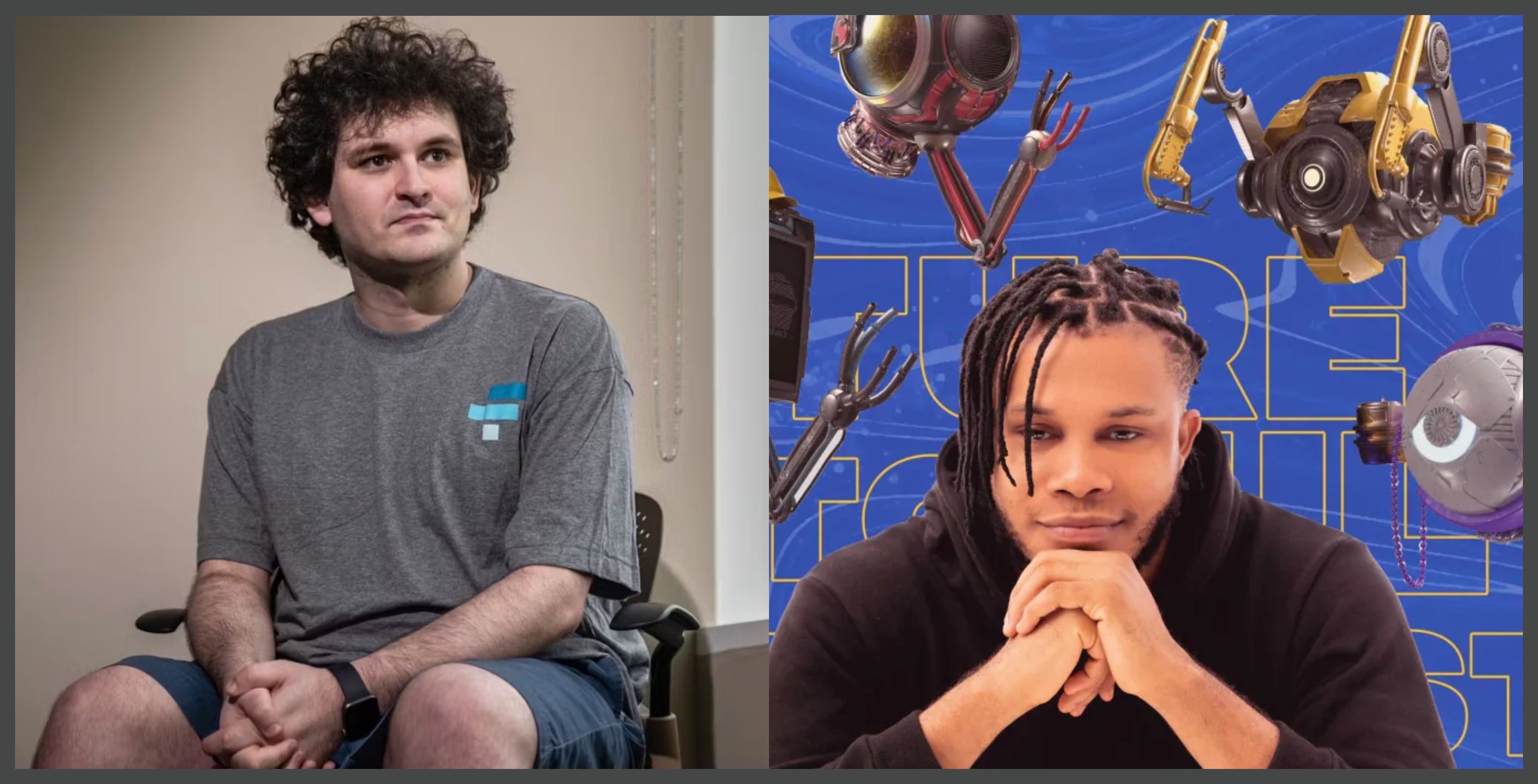
The 2020-2022 crypto boom. Three groups stand out. The scammers, as represented by Sam Bankman-Fried (SBF). The idealists, as represented by Vitalik Buterin and the victims as represented by African NFT artist Owo Anieti.
What’s the author’s angle?
Chow definitely thinks that there was a crypto bubble that popped in 2022 with the implosion of FTX. Whether he thinks crypto is a bubble in its entirety is less clear. He’s definitely not a crypto booster.
Who should read this book?
I mostly read it to partake in some schadenfreude at SBF’s expense. It delivered on that. If you have similar desires I would recommend it, but it also did a great job of outlining the craziness of that era.
What Black Swans does it reveal?
The collapse of FTX played out over a much shorter time period than the collapse of, say, Enron or Lehman Brothers. If crypto gets more entrenched into the world’s financial system while maintaining this quality of rapid volatility, that would be bad.
Specific thoughts: Owo vs. SBF
Before reading this book I had almost forgotten about NFTs. Not in the sense that I couldn’t answer the question “Do you know what an NFT is?” In the sense that, if someone had asked me about the collapse of FTX and the overall craziness of the crypto market, I might have never gotten around to mentioning NFTs as part of that. And indeed, while I think that SBF’s naive malevolence is ultimately the bigger story. NFTs are a better benchmark of the craziness, the promise, and the disappointment of those days. As I mentioned, Chow spends a lot of time talking about Owo Anieti. Here’s Owo’s situation when we first encounter him:
On the morning of February 11, 2021, the twenty-five-year-old artist Owo Anietie sheepishly climbed into the passenger seat of his neighbor’s Toyota Camry and hitched a ride to work.
Owo normally took an Uber or the bus into his job at an ad agency in Lagos, Nigeria, but he was a bit strapped for cash these days. He had just taken out a loan to cover a full year’s rent for a new apartment, because in Lagos there was no option to pay month-to-month. He spent a chunk more to fill out his new space with some cheap furniture, including a chair and a rickety plastic table. His older brother and roommate Nsikak was in between jobs and had just borrowed money from a friend to buy a mattress, which rested on the floor.
And on top of his current debt, Owo had one more big expense looming. He was about to cough up $100—a hefty portion of his $650 monthly paycheck—to upload a piece of artwork onto a website.
…When Owo initially heard about the fee, he thought it was a scam. It seemed absurd to pay for an image upload when everyone else posted their artwork on Instagram for free.
But Owo had recently learned that artists from around the world were making hundreds, thousands, or even millions of dollars from selling NFTs.
You can immediately see the hope and craziness. A poor young man from Nigeria is presented with the opportunity to make more off a single piece of art than he makes in a month or a year. The incredible rate of return is similar to other investment bubbles and get rich quick schemes, but the fact that it’s available to someone in Nigeria is unusual.1 But this is part of the appeal of crypto, it has always advertised itself as being more transformative than other investments. Owo bought into that transformative aspect. His NFT magnum opus was a series of NFTs called AfroDroids. And rather than just create them as a profit making endeavor, Owo decided to give some of the money to Dream Catchers Academy, a Nigeria art school for young girls.
Of course there are lots of investments and asset classes that claim to be transformative. Similarly many of them promise to help people out. But the advantage of crypto was that you could hardcode these promises into the asset. So that’s what Owo and his business partner decided to do:
The power of NFT smart contracts, they felt, might allow them to help the [Dream Catcher Academy] directly and continuously. They could code in a donation to the school every single time an AfroDroid was traded. If NFT enthusiasts swapped AfroDroids back and forth just like they were doing with CryptoPunks and Bored Apes, then the school would receive a constant stream of funding.
AfroDroids’ combination of art, charity, and incentives was too powerful for the NFT community to resist. Here was a project that seemed to represent everything that crypto idealists wanted to believe in: They were using technology, community, charity, and culture to lift children out of poverty and fulfill their dreams.
AfroDroids did in fact make enough money for Dream Catchers to build a new school. The entire AfroDroids project grossed $3 million, but before long the bubble started to burst. AfroDroids plummeted in value. Those that had bought the NFT did not take it well, and many accused Owo of lying about the school. Owo was still better off than he would have been without crypto and NFTs.2 But one gets the sense that the psychological battering he took at the time left him profoundly disillusioned.
In contrast to Owo’s pure idealism you have SBFs fake idealism. I might grant that it wasn’t entirely fake, but it was entirely weird. You may remember that Tyler Cowen asked him:
Let’s say there’s a game: 51%, you double the Earth; 49%, it all disappears. Would you play that game? And would you keep on playing that, double or nothing?
And SBF responded: “I’d play every time.” Which is among the more idiotic things any person has ever said. And don’t get me started (again) on his opinions on Shakespeare. Though the book brings up the possibility that even his weirdness was faked. And some of it clearly was.
Owo is easy to understand, but how do we understand SBF? It used to be more common to try to understand people by referring back to their parents, perhaps we should be doing more of that. SBF hired his parents, Joseph “Joe” Bankman and Barbara Fried, to work at FTX. Given the eventual collapse of FTX their professions are worth mentioning, both are longtime Stanford Law professors. Joe is a tax-law scholar; Barbara is a legal philosopher/ethics scholar. You might imagine that they would have acted as a restraint on their son, and tried to help him navigate the incredible challenge of having a $32 billion company. Instead the two glimpses we get are Joe emailing SBF to complain that he wasn’t being paid enough.3 And SBFs purchase of a $16 million home for his parents in the Bahamas.
Robert Redford died recently. You may be wondering what that has to do with this. When they were talking about Redford’s death they mentioned that in addition to being a great actor he was also a director. I had forgotten about that, and as I cast my mind back to see if I could remember some of his movies I was reminded of Quiz Show, and my favorite scene from that movie.
The movie is about a television quiz show cheating scandal involving Charles Van Doren, played by Ralph Fiennes. In the scene Charles is discussing his upcoming congressional testimony with his father, the famous poet, Mark Van Doren. and his father assures him that he’ll be fine, he just has to tell the truth. Eventually Charles admits that he can’t “just tell the truth” because he was one of the people cheating. His father isn’t merely stunned—he’s gutted.
There’s certainly been some attention paid to Joe Bankman, but perhaps not enough. Particularly as he seems to be a window into a deeper rottenness. I don’t want to put everything in the world or even everything that happened at FTX down to the difference between Mark Van Doren and Joe Bankman, but it’s not nothing either.
If SBF hadn’t lost all that money, if he hadn’t been so stupid and fraudulent with his finances, would his opinions on Shakespeare been enough, on their own, to put him in jail? Man I sure hope so, but I guess we’ll never know. (This may seem like something of a contradiction with my last post, but come on! It’s Shakespeare.)
The South Sea Bubble and Mississippi Bubble of the 1720s, whatever their extravagant promises, contained no provisions for the poor residents of the South Seas and the Mississippi basin.
It was unclear how much better off, or how long it would last. In the wake of AfroDroid’s success Owo moved to Dubai which is not exactly known for its low cost of living.
He was being paid $200k/year. Apparently he was expecting more like $1 million/year. In addition to sending the email he “looped in Barbara” essentially threatening SBF that he was going to tell his mother about this indignity.
"Joe is a tax-law scholar; Barbara is a legal philosopher/ethics scholar. You might imagine that they would have acted as a restraint on their son, and tried to help him navigate the incredible challenge of having a $32 billion company"
You might, if you were a bit more cynical, imagine young Sam got many a lesson on just how close you could skate to the edge of the rules without falling over, and it led to over-confidence.
Frankly I wouldn't assume a professor of tax law or of ethics would have even tried to restrain him necessarily, any more than an anthropologist is going to convince their child to settle down and get married.