

Picky: How American Children Became the Fussiest Eaters in History
By: Helen Zoe Veit
Published: 2026
304 Pages
Briefly, what is this book about?
Stop me if you’ve heard this one… Up until the beginning of the 20th century we never ever did this one thing, and then starting in the 20th century attitudes and culture gradually changed until now, this very new thing, that basically never existed historically, is accepted as a fact of life.
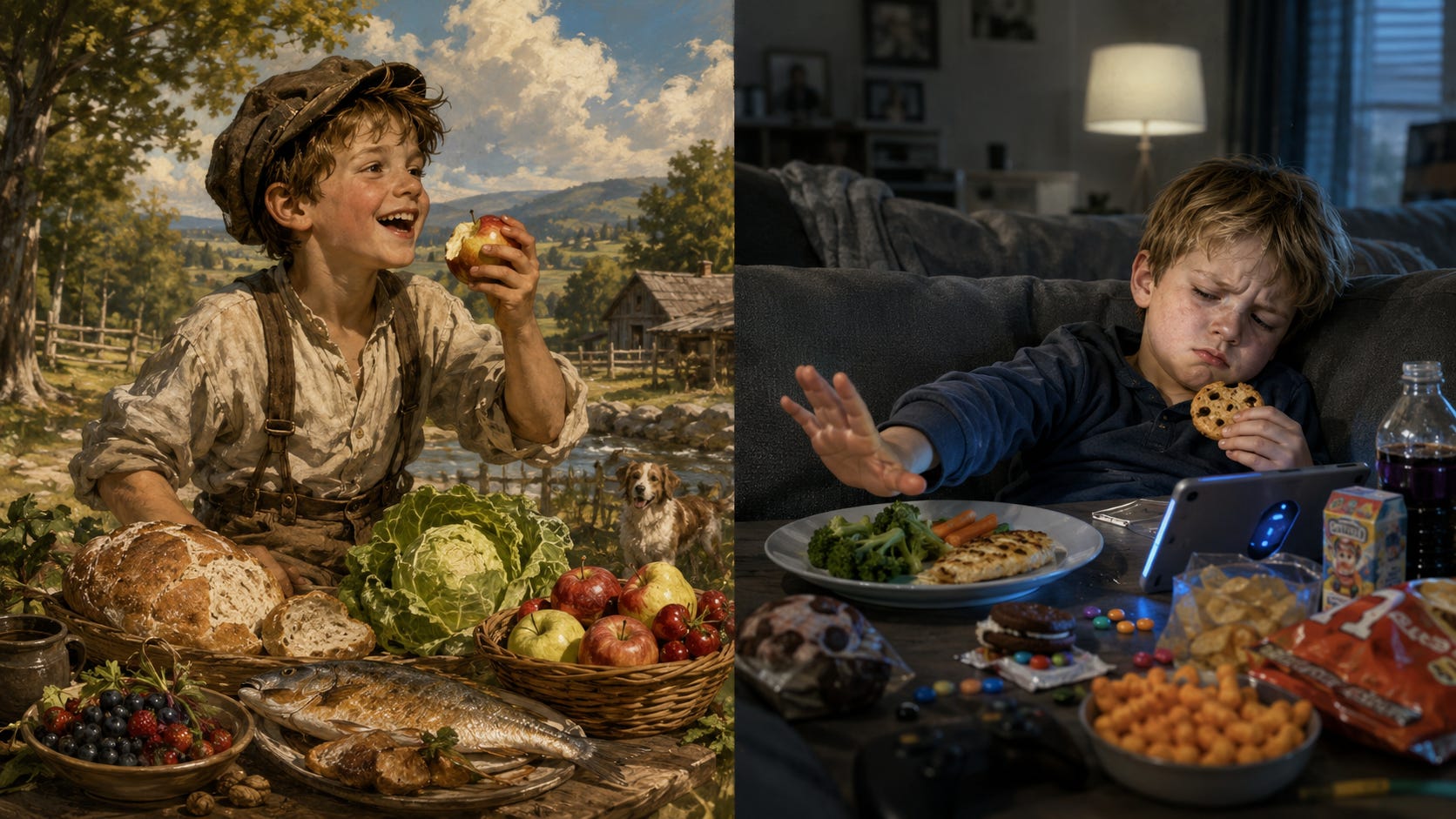
For this go-around it’s children being picky about food. The whole concept only began to emerge in the 1930s and back then it was just used to identify something that needed to be corrected. Like lying, swearing, or truancy, it wasn’t until after World War II that the modern “something we have to work around” usage started to solidify.
This book is the story of why things changed and what we can do to reverse that change.
What authorial biases should I be aware of?
This is not a disinterested academic overview of things. Veit thinks that pickiness is a bad thing, that it’s tied to consumption of “junk food”, obesity, and a general culture of overconsuming food. The 19th-century child eating raw oysters and organ meats could be considered the hero of the story, the entire edifice of modern food dysfunction is the dragon, and the 21st-century child who eats nothing but hyperpalatable, low-nutrition snacks, and then is too full for normal meals is the princess in need of saving.
Who should read this book?
I think people who have picky kids and worry about whether that’s a problem would definitely benefit from reading this book.
I enjoyed it because I’m always fascinated by the strange transitions of modernity. Should you fall into that bucket you’ll probably enjoy it as well.
What does the book have to say about the future?
In contrast to Veit’s pessimistic take on the last century, she’s pretty optimistic about the future. Her advice is mainly directed at individual parents, and much of it comes out of her own experience, but she sees pickiness as a very tractable problem. She doesn’t go so far as to say that reversing the problem of pickiness will transform society, but I think in her heart of hearts she hopes that it might.
Specific thoughts: Beware the man of one study
In Veit’s telling a lot of the problem comes down to abundance—abundant leisure, abundant variety, abundant refrigeration, and most of all abundant food. In the past there wasn’t too much to snack on and children were incredibly active. As such, most children showed up to a meal of local ingredients, both tired and hungry. A meal they helped to prepare! All of those elements started to change in the early 20th century, and suddenly there was actually an option for children to be picky.
As with so many things, worries about children drove this trend, and these worries began with worries about childhood mortality. Preceding the arrival of pickiness, the broad progressive movement of the turn of the century brought with it scientific parenting. The basic idea was that the right diet could protect against diseases, and by extension, reduce childhood mortality. The right diet consisted of measured portions of bland food doled out on a precise schedule. Underlying all of this was a general sense that you couldn’t trust children to choose what they ate, because if you did they would eat more exciting foods all the time, which would screw up their digestion and lead to ill health.
It was in this environment during the 1920s and 1930s that Clara M. Davis decided to run a test to see what children would eat if you just let them eat whatever they wanted. Her conclusion was that, left to their own devices, children would often gorge and sometimes just nibble a bit, and they would eat a wide variety of different foods (sometimes straight salt). But after all was said and done, they ended up with a healthy diet. This served as a refutation of the “you can’t trust children to eat well” theory. And beyond that, it was very influential in future debates about how to handle childhood diets.
Many people used this study as the basis for recommendations about child-rearing, the most famous of whom was Dr. Benjamin Spock. Spock was an insanely famous dispenser of pediatric advice. It was said that his book The Common Sense Book of Baby and Child Care sold more copies than any other book save the Bible. Spock was also a Freudian, and for him the world was populated by anxious, meddling mothers. Spock used the Davis results to claim that children naturally ate healthy food, and if they were eating poorly it was because they were reflecting the anxieties of their mothers and caregivers. There was just one problem:
You remember how I said Davis let the children eat “whatever they wanted”? Spock interpreted it as being literally whatever. In reality, while Davis had offered the children ten different foods at every meal—that was the choice element—she also ensured that all of the foods were already healthy, unprocessed, unsweetened, and even unseasoned. It wasn’t as if she had offered the children a pile of Twinkies… But that was the way that Spock interpreted it. Nor was Dr. Spock alone. Numerous people took this study and turned it into a sweeping ideology that held if you just gave children whatever they craved the child would naturally end up with a healthy diet.
We see something similar with the opioid crisis where huge weight was placed on a one paragraph letter (not even a study) published in the New England Journal of Medicine in 1980 which claimed that opiates only ended up causing addiction in 1% of people.
We also see it in stuff like priming, power-poses, and all the other studies that didn’t replicate. I guess I’m somewhat heartened to see that it’s not strictly a dysfunction of the last few decades, but alarmed to see how long this particular “one study” was misinterpreted.
People should spend more time going back to the source, and understanding the history, which is basically what Veit is doing, and for that she should be commended.
—-----------------------------------------------
By apologies for the longer than usual gap in posts. Things got away from me. I’m hoping to do better, but I make no promises. Particularly considering the fact that over the next three months I’ll be in a hotel one out of every three nights. Speaking of which, my next trip is to Less Online the first weekend of June. If you’re going to be there make sure to let me know. You can always email me at “we are not saved” (smushed together) [at] gmail.
I guess they can no longer use , "there are children starving in China". Never figured out how exactly I was helping them. And we're way past , "during the depression.......". For those of us of a certain age.
"I enjoyed it because I’m always fascinated by the strange transitions of modernity. Should you fall into that bucket you’ll probably enjoy it as well."
Another data point in the 'Seeing like a State' file of modernity's hubris, where technocrats roll in and assume their scientific approach has got to be better than whatever backwards ideas people naturally have?