

I.
If you don’t live in Utah, you may not have heard that the Great Salt Lake is in trouble. It’s been rapidly dwindling in size and depth, and while it’s never going to disappear entirely (though look at the Aral Sea), there are always issues when an environment goes through a rapid transformation. The big worry is that the lake will become so salty that even brine shrimp and brine flies can no longer survive. This would eliminate a major source of food for migrating birds, while at the same time a shrinking lake also removes the wetlands they use for mid-migration habitat. There are other potential problems as well, but you get the idea.
I’m old enough to remember when we were having the opposite problem, when the lake was so high that it threatened I-80 (the stretch west of SLC), the SLC airport, and various communities and businesses perched around the edge of the lake. This was in the mid-80s and my father worked at one of those businesses. This particular business would take lake brine, pump it into shallow ponds, allow the water to evaporate away, and then harvest the minerals left behind. Their big cash product was potash,1 which is used in fertilizers. The rising lake threatened to flood their carefully managed pond system, so it was a real ongoing crisis for my father back then.
After a couple of years of hard fighting, the lake eventually won. The outer dike was breached and lake water flooded into the pond system, completely wiping out the productive capacity of the business. It was a dark day.

Fortunately, the business was insured. Knowing of the business’ susceptibility to “acts of God”, they had taken out business interruption insurance with Lloyd’s of London. With their pond system completely wiped out, it was time to make a claim against that insurance. Perhaps you’ve dealt with a claims adjuster after a car accident. Perhaps it was annoying, maybe it was even adversarial. Now imagine how adversarial it might be if you were making a claim for tens of millions of dollars.
Lloyd’s flew a team out to Utah and negotiations began. The damage to the pond system was obvious, and Lloyd’s was more than happy to cut a check for $250k to cover the damage. It was the fight over how much to pay for the future interruption to the business, while they were rebuilding everything, that was always going to be the main event. Lloyd’s was prepared to argue that once the damage was resolved their responsibility was over, as in, $250k was all they wanted to pay. My father was put in charge of arguing the other side—while they were rebuilding they wouldn’t be making money—and the business interruption was supposed to cover that as well. And in any case getting the ponds back to productivity was more complicated than it appeared.
Lloyd’s had staked out the bare minimum position of $250k. My father’s job was to stake out the maximum plausible position. The policy had an absolute cap of $100 million, so he created a model that showed total losses of $103 million, justifying the maximum payout. Lloyd’s claimed that his model was too simplistic and recommended some changes. After the changes, it was $108 million. Further refinement brought the amount to $112 million, at which point they stopped suggesting refinements. In the end Lloyd’s settled for $56,250,000, almost exactly halfway between the $112 million position my father had staked out and the $250k Lloyd’s originally offered.
This was a fantastic win for my father and his company, but the whole process bothered him. He had figured, going in, that a fair settlement value was probably $40 million. Given the difficulty of making such value judgments, maybe it was closer to $50 million, but $56 million was clearly on the very upper end of things. But more than that, he was bothered by the model he had used. It did a great job of fitting historical data, but it was fundamentally flawed as a tool for predicting future production.2
As an engineer with a strong scientific ethic, he had spent his life trying to get the most accurate number, not the highest number. $112 million was the highest number, but he knew it didn’t reflect reality. As the process went on he ended up confiding in someone fairly high up in the Church. This person was a Stake President,3 cousin to one of the Prophets, and, perhaps most saliently, a lawyer.
This person reassured him. He pointed out that adversarial processes are designed around the idea that each side is going to act with obvious bias and self-interest. And he was doing his job. The engineering firm Lloyd’s hired was doing their job. And the various adjusters (Lloyd’s had some and his company had some) would do their job by sifting through the competing claims until they agreed on an amount. Despite this reassurance, my father still wondered about his actions and continues to reflect on them to this day.
II.
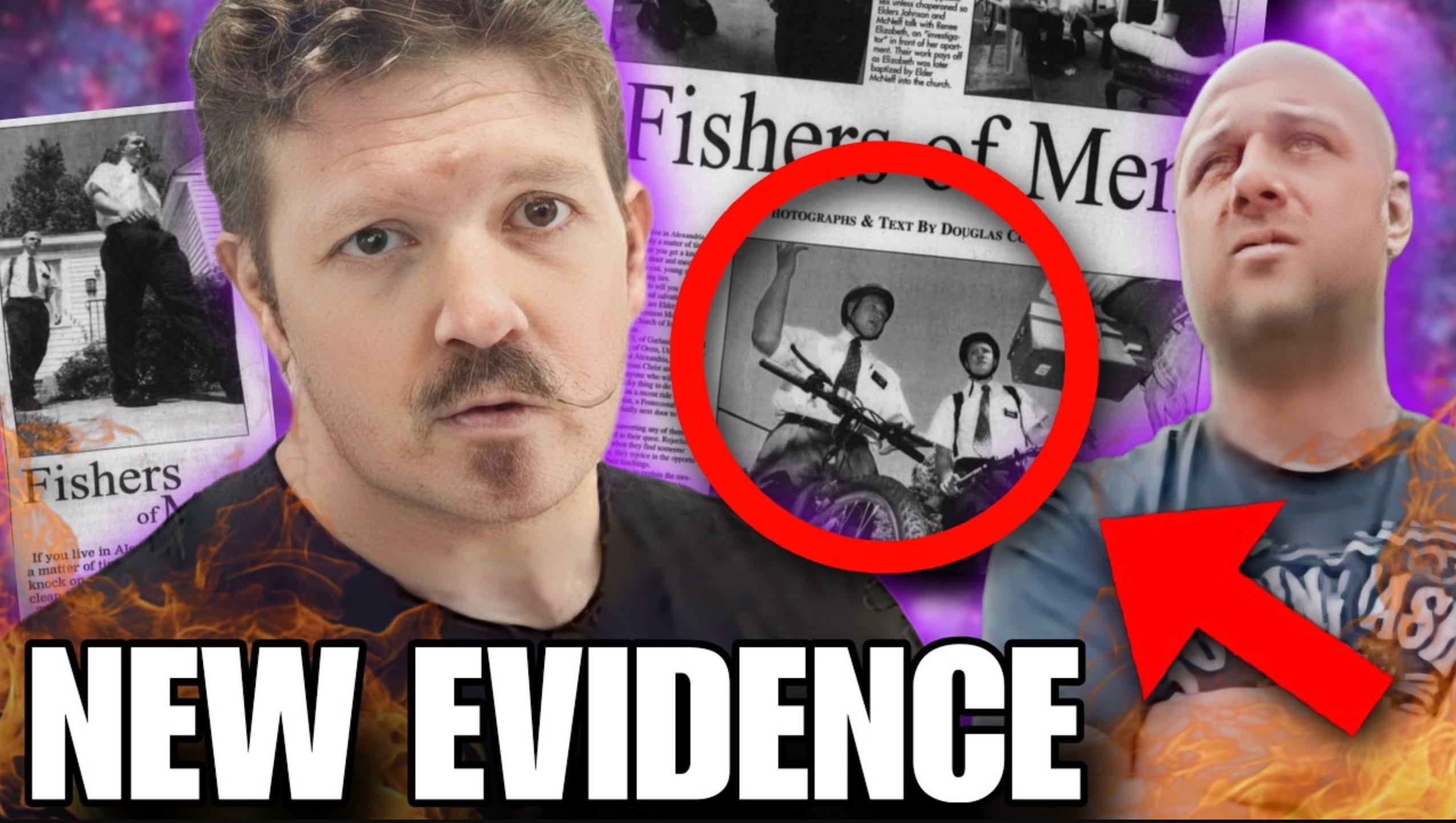
I was reminded of my father’s experience recently by the crazy Bricks and Minifigs story. For those of you who haven’t been swept up in things, I don’t have time to do justice to the epic viral saga which has unfolded over the last four weeks, but I’ll try to hit the high points:
Bricks and Minifigs (BAM) is a franchise-based organization with stores all over the US. Primarily, they make their money as a lego reseller. Back in 2023, Bryan Mansell came to an agreement with the Salem-Keizer, Oregon location of BAM to sell, on consignment, a huge lego Star Wars collection belonging to his father. In November of 2024, the franchise was precipitously transferred to some new owners, Brandon Best and Joshua Johnson (BB & JJ). After this transfer, Mansell reached out to the new owners to make sure that the consignment agreement was going to continue to be honored, since some portion of his father’s collection remained in the store and unsold. BB & JJ refused to honor the agreement or acknowledge that they even had any of Mansell’s legos.
Mansell tried various tactics to get his father’s legos back, but nothing worked. As he grew increasingly frustrated, he eventually reached out to a YouTuber, Reckless Ben (RB). The “reckless” adjective was appropriate as RB proceeded to engage in all manner of crazy tactics in an attempt to recover the legos. These tactics included organizing a satirical business called “We Steal From Old People”, setting up raffles for the legos, and inducting one of the employees of the franchise into a cult. The corporate offices of BAM were also brought into things by RB, because of the nature of the transfer, the close ties BB & JJ had with corporate, and the normal passing-the-buck that happens with things like this.
BAM continued to stonewall at all levels. In response, RB’s tactics continued to escalate until eventually the police got involved and RB was arrested. He was later released and hearings on this whole mess will have started taking place about the time I publish this.
There are significant disputes about nearly every aspect of the story, and I’ve really only scratched the surface of the giant internet drama which has ensued since RB released his first video a few weeks ago. But for our purposes, here’s the part that’s important:
BAM is headquartered in Provo, Utah. The BAM CEO, Ammon McNeff, and BB & JJ are all LDS/Mormon. RB was arrested in American Fork, a suburb of Provo, and many of the police officers involved in that arrest are also certainly LDS. In our conspiracy-laden times, it’s easy for people to look at all this and imagine that Mormon business owners are engaged in backroom deals with Mormon police officers to arrest RB on inflated charges—that the “Mormon Mafia” is protecting its own and crushing the little guy.
The situation has gotten pretty crazy, but as the accusations and counter-accusations fly back and forth between BAM and the supporters of RB (which at this point appears to be everyone else who’s even remotely familiar with the story) it’s clear that the LDS Church has suffered real reputation damage from the actions of the Mormon executives of BAM and their designated (also mostly Mormon) lackeys.
This pisses me off. That these blustering, incompetent idiots,4 with their total lack of Christian charity, should give the entire Church a bad name is galling. But wait, didn’t I just basically say that all is fair in an adversarial process? Am I only mad because this ended up going viral and damaging the reputation of the Church?
I don’t think so, but it’s a question that’s worth examining. What is the difference between what the BAM idiots were doing and what my father was doing?
III.
After all this, we arrive at the fundamental question: How should a person’s Christian faith affect their behavior in business?
I think we can divide answers to that question into three buckets:
1- Matthew 5:40: And if any man will sue thee at the law, and take away thy coat, let him have thy cloak also.5
In this verse Jesus specifically mentions lawsuits and how to respond to them. This seems on point given that the BAM situation is nothing but lawsuits now, and my father’s story involved something very close to a lawsuit. Now it could be argued that lawsuits then were different from lawsuits now (though not as much as you might expect). Also, many of the BAM complaints are criminal in nature rather than civil. Finally, could the residents of 1st century Judea really be expected to understand and navigate insurance claim adjustment? Nevertheless, I think such considerations are largely examples of special pleading. The core exhortation is clear. And yes, it’s also extreme, but that’s Christianity for you. Moderation doesn’t have the role most people imagine.
Perhaps the scripture I should be referencing for this category is Matthew 6:24:
No man can serve two masters: for either he will hate the one, and love the other; or else he will hold to the one, and despise the other. Ye cannot serve God and mammon.
Maybe there is no ethical way to mix Christianity and business.
2- Matthew 22:21: They say unto him, Caesar’s. Then saith he unto them, Render therefore unto Caesar the things which are Caesar’s; and unto God the things that are God’s.
There are a lot of Christians in the world, and I’ve never heard of anyone being sued for $200k and immediately settling for $300k.6 So either every one of them is behaving wickedly (possibly?) or some moderation is in order for a modern, pluralistic society to function.
My father was then (and is now) a devout Christian, but the same could not be said for many of the people he was arguing for. I think if he had used his Christianity as a reason not to defend his company to the best of his ability, they would have fired him and found someone else. It was never just him that was being affected. It was a company with hundreds of employees. Certainly Lloyd’s wasn’t going to exercise any pre-emptive Christian charity. My father didn’t make up any numbers. He created a model which the opposing side was free to challenge. (As a matter of fact, one of the engineers from the other side spent a month going over the model and the underlying numbers.)
He didn’t lie. He didn’t steal. The system he followed couldn’t be described as Christian, but he was following a system.
Perhaps, in a sense, following this adversarial system as a way of reaching a fair conclusion was rendering unto the law the things which are the law’s.
3- Melian Dialogue, Thucydides: The strong do what they can and the weak suffer what they must.
In the previous bucket we imagine that there is some separation between church and state, or rather the laws of that state. That some things belong to Caesar and some things belong to God, but that nevertheless there is morality common to both. In this bucket the separation is total: all is fair in love and war, and sometimes, in business, you’re at war. Victory is what’s important, however it might be obtained. If you’re a big strong company, and you’ve got someone’s legos, then maybe they should just accept the fact that they’re not getting them back.
Clearly there is no Christian justification for this bucket. But maybe someone who called themselves Christian could justify it by declaring business to be a completely separate magisterium? Something along the lines of “Rules are fine when you’re amongst friends and fellow believers, but business is a jungle, and only the strong survive.”
The first bucket is for people who believe Christianity is incompatible with business. This bucket starts with the same premise and arrives at the opposite conclusion: that Christianity has nothing to do with conducting business.
IV.
I would contend that there are very few people in bucket one, and in any case, I included it just to be comprehensive. That’s not the point of this essay. I’m more interested in the separation between buckets two and three. My contention is that my father’s actions put him in bucket two, while the idiots on the BAM side of the “stolen”7 legos saga are in bucket three.
But what is the bright line dividing those two categories? What is it that makes the actions of the BAM people clearly bad, while making my father’s actions appropriate, or at least defensible?
I can think of several possibilities: One possibility is that, like the Supreme Court’s comment on pornography, you know it when you see it. This seems like a cop-out, but I don’t think it should be dismissed out of hand. Most of the time this is how we operate. The reason people have reacted so strongly to the BAM fiasco is not because they’re measuring things against some complicated legal framework. When they hear JJ talking to RB on the phone and arguing that the consignment contract doesn’t apply to him, they don’t understand the principle of nemo dat quod non habet, but they can tell that JJ is being immoral.
Perhaps, if we were going to categorize things, it might make sense to start by talking about identity. Perhaps the mistake made by the BAM idiots is that their identity ended up being tied to their business, rather than their Christianity. Being in business is hard, and if you don’t have confidence and determination, you’ll probably fail. If the business is you and you are the business, then confidence and determination follow naturally. Also a lot of people end up identifying what they do as who they are, and in a tense situation this can blind them to their other commitments. Still, if we’re looking for a bright line, identity is not going to give us that.
Alternatively, we might be able to draw a dividing line between “higher laws” and “lower laws”. Giving someone who sues you more than what they’re asking for is maximum Christianity—while not stealing is closer to the bare minimum. Perhaps that’s the dividing line between the two categories. My father wasn’t exercising maximum Christianity, but he was definitely above the bare minimum, while the BAM idiots are accused of not even doing that.
V.
I think there’s an element of truth to all the previous methods I’ve mentioned for dividing buckets two and three, but if I had to settle on one answer I would turn, as so many Christians do, to C. S. Lewis:
No man knows how bad he is till he has tried very hard to be good.
I would contend (and admittedly I’m biased) that my father was trying very hard to be good. It’s possible he failed in this attempt. But in his efforts to be good, he also recognized that he could be bad, that just because he was doing what was expected didn’t make it right. In the end he still did what was expected, but at least he interrogated the decision.
This, in my opinion, is the bright line dividing buckets two and three. We all fail, all the time, but are you trying to be good?
I’ve seen very little evidence that the BAM idiots were trying to be good, and to the extent that there is some evidence of that now, it definitely feels like it’s something they’re being forced into, not an honest reflection of genuine morality.
Perhaps this is why I was set off by this story and the way it reflected on the Church and its members. Particularly if you live in the Provo area, in the epicenter of Mormon culture, it’s easy to drift along doing all the things that “show off” goodness—attending Church, accepting positions as a lay leader, not drinking or smoking—without really interrogating your Christianity. Without wondering, to bring in a cliche, “What would Jesus do?”. Without deeply understanding how fallen we all are.
And, of course, the biggest reason for my anger is that I saw this same behavior in myself. I have often been too casual with my own business dealings. I have frequently just gone through the motions, rather than exercising actual faith. I am not trying very hard to be good, though I’m well aware of how bad I am.
There is perhaps one final lesson. It is hard to be good, and to adapt another quote, we should “be kind, for everyone [we] meet is fighting a hard battle.” We should exercise charity and compassion towards those around us, the most Christian value of all, and one I’m still working on.
—-----------------------------------------------------------
I know it should be LEGO, and that the plural of LEGO is not legos, because LEGO should never be used as a noun, only as an adjective. So it should be something like LEGO blocks. But I decided not to do that… Nevertheless, like all great masters, one has to be aware of a convention before one can discard it.
For more reckless discarding of conventions, and even more reckless defenses of convention consider subscribing.
Most potash produced in the world is potassium chloride. The Great Salt Lake is one of a handful of places where potassium sulfate (K₂SO₄) can be produced “naturally”. Potash is generally used as a fertilizer, and certain plants are very chloride-sensitive, which makes potassium sulfate a far better option. As one example, apparently, potatoes fertilized with potassium chloride end up being “waxy” rather than “fluffy”.
I had my father review the story because I was hazy on numbers. Here’s what he had to say about the model:
I had some very complex models that I used all the time. But when I was originally charged with developing the business interruption case, I was inspired to chuck all those models and develop a simple, linear, 3-factor equation. It was based on %K in the lake, pond acreage, and annual rainfall. The model was very accurate in fitting historical data, and fundamentally flawed as a tool to predict future production.
The top-level local leader in the LDS Church, generally over 7-10 congregations and around 3,000 members
Regardless of BAM’s culpability, their strategy for dealing with this crisis has been unquestionably idiotic. At any point in the process they could have made this problem go away for $200k, maximum. If they’d spent some time doing a real investigation when Mansall first came to them, they could have probably made Mansall happy for $80k. Instead they’re looking at millions of dollars in lost revenue and reputational damage.
If you don’t appreciate the beauty of the KJV you can follow the link for alternative translations.
We’ve all heard of people who forgave their child’s murderer, so things like this do happen, but from a monetary perspective, I’m unfamiliar with any examples.
The more accurate legal term would be conversion.
I too am a little bothered by adversarial systems that claim to find truth despite individuals involved being encouraged to shade it, but it's arguably the best sort of system we're going to find -- "out of the crooked timber" etc.
There's real questions about how well it works when power differentials are great, but ironically in your father's case, sometimes the bigger corporation is prone to writing large checks simply to make the case go away... something the lego chain ought to have considered, given reputational damage is the asymmetric weapon of the economic underdog in our system.
edit: I suspect the radical Christian answer would be something along the lines of, "your money exists to further the kingdom and your sustenance is from above; any action taken without that in mind is falling short."
But of course as an employee in modern America, you actually must navigate allegiance to two masters.
"What is the difference between what the BAM idiots were doing and what my father was doing?"
The difference is that the members of a church (any church) are supposed to place allegiance to God above money or anything else. As such, they share a common culture. Members of the body can not be adversaries of each other, as that would be a Body at war with itself.
Your father and Lloyds of London do not share a common culture. There is no shared membership (beyond that of the human race) that can bind them together, so the relationship must be adversarial. You touch on this somewhat in #2.
The Mormon Church is a top-down ecclesiastical structure (like Anglicanism or Catholicism) so these sorts of disputes between members should be dealt with internally to avoid giving the church a bad name to the outside world. All of these people have failed to do that.