

A Day in the Life of Abed Salama: Anatomy of a Jerusalem Tragedy
By: Nathan Thrall
Published: 2023
272 Pages
Briefly, what is this book about?
The book operates on three levels:
First, the book spends quite a bit of time giving you Abed’s history: his youth, his participation in the Palestinian resistance, his marriages, the associated family dynamics, etc.
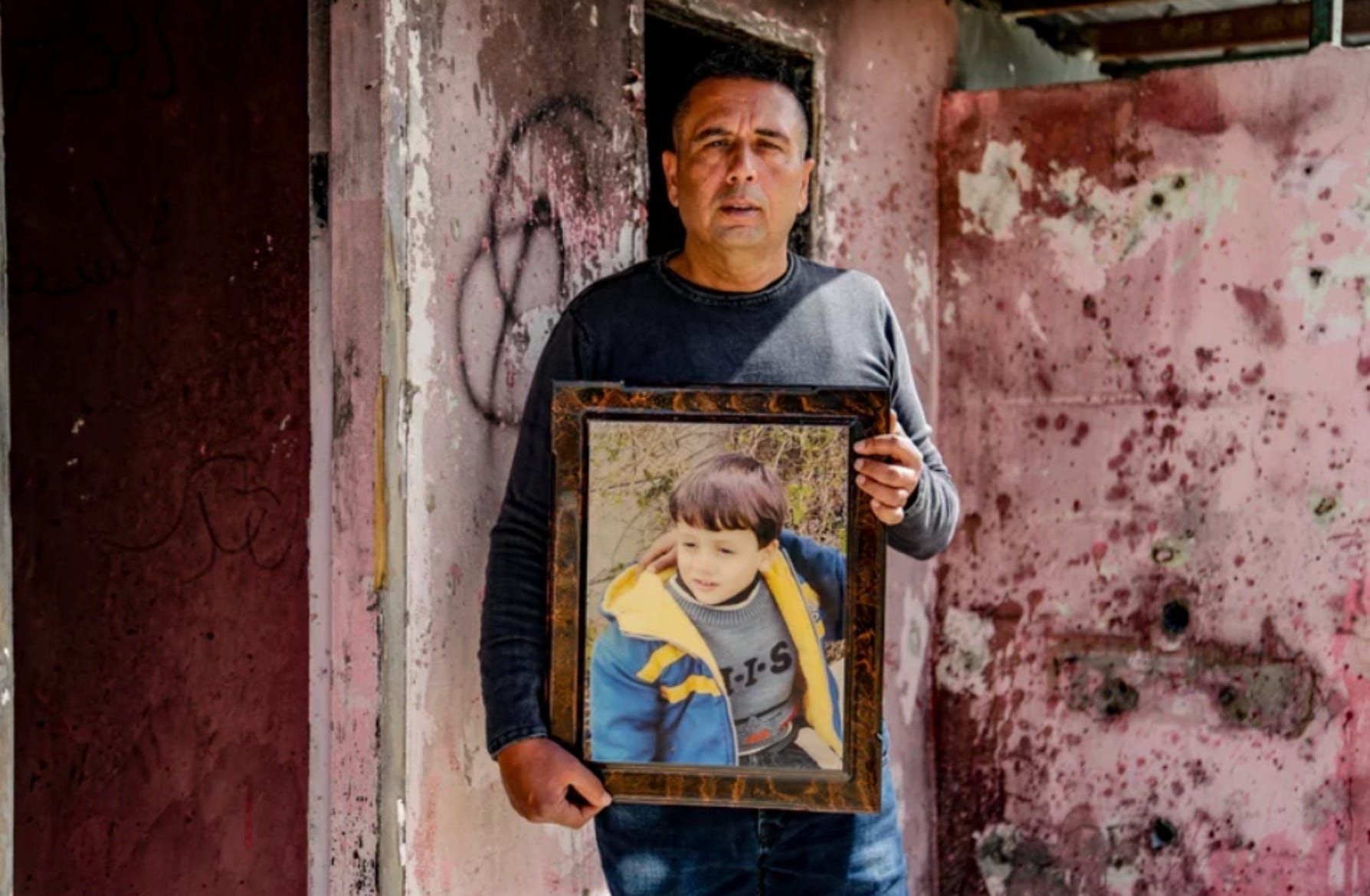
Second, there’s the actual “day” from the title. Abed’s desperate search for his son after he was involved in a horrific bus accident, and the various difficulties presented by Israeli control (checkpoints, different passes, separate roads, etc.)
Third, there’s everything beyond Abed and the “day”. Including the backstory on how the roads were routed, the walls were built, and the rules implemented by the Israelis. The book also contains histories on dozens of characters, including Abed’s many loves, an Israeli colonel who designed the wall, ultra-Orthodox volunteer rescuers, and Israeli settlers living in the area. I found the story of Huda Dahbour, who works as a physician with a UNRWA mobile clinic, to be particularly interesting. She also has a child involved in the wreck, and has to deal with a tragedy that’s depressing for both its similarity to and differences from Abed’s.
Taken all together, it’s a level of tragedy, complexity, poverty, and culture that’s hard to process for someone living in relative ease on the other side of the world.
What authorial biases should I be aware of?
The book is clearly centered on the Palestinian side of things, and it’s obvious that Thrall largely views the Israelis as being immoral, unjust, and using their greater power to impose ridiculous restrictions. That said, he does offer sympathetic accounts of some Israelis, but most of his sympathy is reserved for the Palestinians.
Who should read this book?
This was another book recommended to me in order to understand the conflict, and certainly it gave me a better insight into what it’s like for a modern Palestinian living in and around Jerusalem and the West Bank. It definitely has a tighter focus and doesn’t try to go all the way back to Ishmael and Isaac, or even back to the partition or the 1967 borders.
I think it did provide a better understanding, but Abed was not an especially sympathetic “protagonist”. Some of the other people were, particularly Huda, but much of the sympathy you feel for her comes from the awfulness of her Palestinian husband, rather than the tyranny of the Israelis, as one would have expected. (Though that tyranny is in there.)
What does the book have to say about the future?
I would say it made me less optimistic. To put it in US terms, legalizing gay marriage was easy, deciding to rebuild the interstate freeway system would be hard. This book shows you the Israeli version of the interstate freeway system, only it’s designed to keep Palestinians away from Israelis.
Specific thoughts: Easy changes vs. hard changes
The idea of gay marriage vs. rebuilding the interstate made me think of what would be easy to improve about this mess versus what would be hard to improve.
I have been advised that I don’t have to pick a side, though I’m not sure that advice will ever entirely land, but perhaps if I can’t absorb it, I can deflect it. And instead of considering who bears the guilt, or what the solution might be, I’ll just consider the level of difficulty for the many things I would like to see.
The Israelis, at least as it’s related by the book, do a lot of dumb things. But many of these things appear to have easy fixes.
A few examples:
It took thirty-four minutes for Israeli ambulances to arrive at the crash site, even though they were just a couple of minutes away.
There was a military checkpoint near the crash, but none of the soldiers did anything to help, even when bystanders pleaded with them.
In the wake of the crash and the deaths of the Palestinian school children, Israeli social media was full of gleeful comments. One example:
Those little Palestinians could be the terrorist attacks of the future. Don’t give me that bullshit that everyone’s a human being. They’re whores, not people, and they deserve to die.
Fixing these three examples seems like it should be easy. If ambulances are a couple of minutes away they should arrive in a couple of minutes. The military could issue an order for soldiers to help if there’s a nearby accident. Finally, it wouldn’t require exceptional compassion to avoid saying children deserved to die. It would just take a normal amount of compassion. Perhaps there are difficulties I’m not aware of, certainly creating social media that’s not a cesspool has been difficult everywhere, but these all seem like tractable issues.
I don’t see quite as much “low-hanging fruit” on the Palestinian side. Possibly this is due to “the soft bigotry of low expectations” as the phrase goes. But let me relate a story which should help illustrate what I mean.
The early part of the book is all about Abed’s secret courtship with Ghazl Hamdan. They were very much in love, and definitely planned to get married, but the culture didn’t allow open dating, so they had to communicate with letters, or clandestine phone calls.
This went on for seven years, but finally Abed proposed. He was waiting for a response from Ghazl’s father, Abu Hassan. His sister-in-law Layla (wife of his brother) drove him to Ghazl’s family’s house to deal with an unrelated construction matter. (Abed works for Abu Hassan.) Abu is there, and Abed tells Layla not to interfere, which he knows she has a tendency to do.
On the way to the car, as Ghazl looked down on them from the balcony, Layla confessed that she had spoken to Abu Hassan when he had left the room for wudu. Abed angrily reminded her that she had promised not to intervene. She hadn’t meant to, she said; it was Abu Hassan who had initiated the conversation.
“So,” Abed asked, testily. “What did he say?”
With an air of solicitude that was not entirely convincing, Layla relayed the exchange.
“Abed is a good guy,” Ghazl’s father had reportedly said, “a hard worker. He’s strong, affable, funny. I’ve gotten to know him well. But there’s one thing I can’t accept: he’s a Salama.” Layla saw the shock and pain on Abed’s face.
“Really? He said that?”
“Yes,” Layla said, with cloying sympathy. “He did.”
Abed was blinded by the intensity of his humiliation. Though faintly aware that his reaction was precisely what Layla hoped to see, he was unable to quash his anger.
“You tell him that I withdraw the proposal!” Turning to face Ghazl, who was still out on the balcony, he added, “Ghazl is like a sister to me and I could never marry her.” He wasn’t sure if Ghazl had heard him.
Apparently there was a long standing, low-level feud between Abed’s family, the Salamas, and Ghazl’s family, the Hamdans. I’m not sure how that manifests, because Abed works for Abu Hassan, so we’re obviously not talking Hatfields and McCoys, but apparently it was a big enough deal that Abed believed Layla, and immediately broke off the engagement in dramatic fashion, breaking poor Ghazl’s heart.
On some level he knew that Layla might be lying. He was “faintly aware” that Layla was hoping to provoke exactly that reaction. And yet he reacted with immediate anger, and his pride would not allow him to back down later.
It’s only a couple of decades later that he talked to Abu Hassan and finds out that Layla had lied, and that he had allowed that lie to blow up a profound, seven-year relationship, in a single moment of anger and pride.
I’m sure I could be accused of some form of cultural essentialism, or other crimes I’m unaware of, but this willingness to suffer immense harm over a point of pride, what some call honor culture, appears to be a very deep part of Palestinian culture. It should be noted that no one tries to counsel him to “get over it”, or points out that he may have acted rashly. By all accounts it seems to be taken as something people did from time to time, not an extreme over-reaction.
You might disagree, but there is definitely evidence for the presence of an extreme honor culture among the Palestinians. If so, we’re talking about thousands of years of embedded behavior. (By contrast, polarizing social media has only been around for a few decades.) From here it doesn’t require much of a stretch to map this onto the ongoing conflict—the willingness of Hamas to accept enormous harm without the slightest indication of conciliation.
Look, I get it. I come from a long line of prideful Scots-Irish rebels. I could tell you stories about the poverty suffered by my grandfather because he wouldn’t bend on a point of pride. But it does suggest that certain changes are going to be very difficult, if not impossible, and this is part of a conflict that already seems impossible to solve.
The book brought me closer to an understanding of the conflict, but it didn’t create any optimism about solving it.
—-----------------------------------------------------
As the bards are known to say, “I still haven’t found what I’m looking for”, that is with respect to Palestinian sympathetic literature. I have certainly developed a more negative opinion of the Israelis, but I haven’t read anything yet that felt like a strong positive case for the Palestinians. So I continue to be open to recommendations. Feel free to post them in the comments, or alternatively feel free to criticize me for my benighted views
.
"It took thirty-four minutes for Israeli ambulances to arrive at the crash site, even though they were just a couple of minutes away. There was a military checkpoint near the crash, but none of the soldiers did anything to help, even when bystanders pleaded with them."
These rules (the roadblocks, the instructions not to leave your post to help at an accident) were put in place for a reason. Muslims have a track record of tugging on humanitarian heartstrings and then detonating explosives to kill the Israeli responders.
"It would just take a normal amount of compassion."
Perhaps. But when facing an enemy that will blow himself (or his wife and child) up just to hurt you, compassion gets you killed. Your example of the marriage proposal is instructive here: honor is more important than even life, and what's more honorable than martyrdom?
This is war. The fact that one side uses suicide bombers and the other uses F-16's doesn't change that. Trying to apply our Western, peacetime moral compass to total war will always fail.
That said, thanks for the book recommendation. I will read it in the vein of Sun Tzu's injunction.